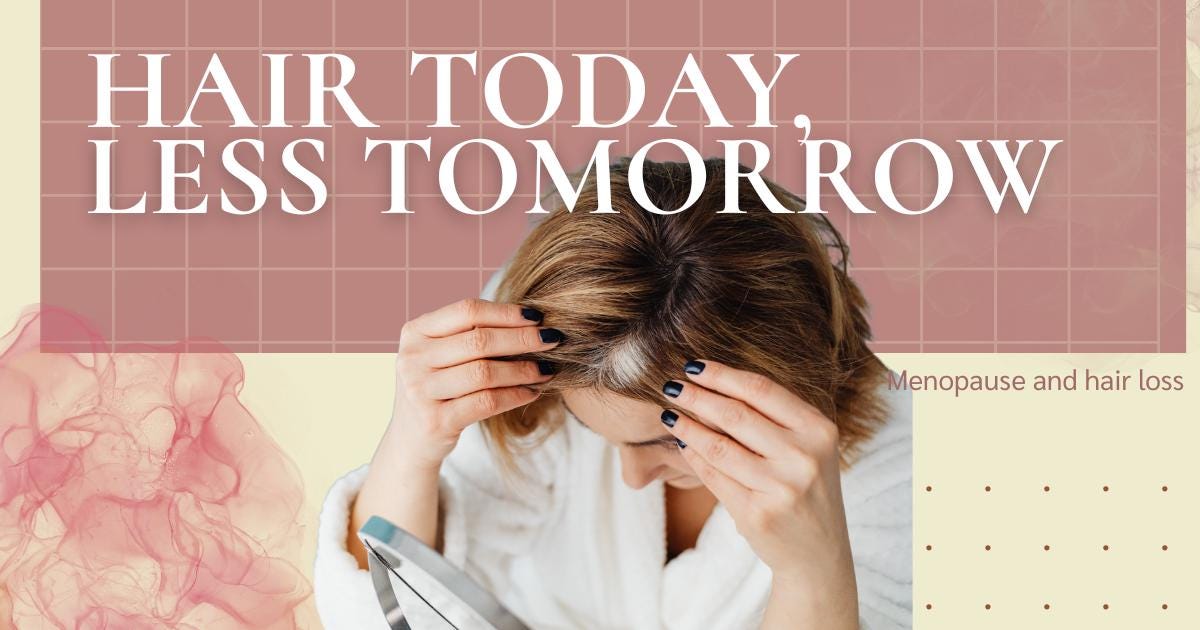
You notice it first in the shower drain. Then in your hairbrush. Then in the inexplicably large amount of hair on your pillow each morning. Your ponytail is thinner. Your part looks wider. And you find yourself studying other women's hairlines in a way that would be concerning if it were not so completely relatable. Hair loss during perimenopause and menopause affects up to 50% of women and is one of the most emotionally distressing symptoms of this transition — yet it rarely makes the short list when providers talk about what to expect. Which is a problem, because understanding why it is happening and what can be done about it makes an enormous difference, both practically and psychologically. Why Is This Happening to My Hair? The Estrogen-Androgen Shift Hair follicles have estrogen receptors. Estrogen promotes the growth phase of the hair cycle (anagen) and suppresses the influence of androgens like dihydrotestosterone (DHT) on hair follicles. As estrogen and progesterone decline during perimenopause, androgens become relatively more dominant — even if their absolute levels have not increased. This relative androgen excess causes hair follicles to shrink, producing finer, shorter hairs and eventually ceasing production in affected follicles. The resulting hair loss pattern is called female pattern hair loss (androgenetic alopecia) and typically presents as diffuse thinning at the crown and a widening part — different from the receding hairline seen in men. Thyroid — The Usual Suspect Thyroid disorders — particularly hypothyroidism — become significantly more common around the time of menopause and can cause hair loss that mimics hormonal thinning. If you have not had a recent thyroid panel, this is worth requesting. TSH, free T3, and free T4 are a reasonable starting screen. Treating underlying thyroid dysfunction can meaningfully improve hair density. Nutritional Deficiencies Iron deficiency (with or without frank anemia) is one of the most common and correctable causes of hair loss in women. Ferritin levels below 70 ng/mL have been associated with hair loss even in the absence of anemia. Vitamin D, zinc, and biotin deficiencies can also contribute, though biotin deficiency is less common than supplement marketing would suggest. Stress and Telogen Effluvium Physical or emotional stress — including the stress of managing a body that feels like it is changing without your consent — can trigger telogen effluvium, a form of diffuse hair shedding that occurs two to three months after the stressor. The good news: telogen effluvium is temporary. The frustrating news: it can overlap with hormonal hair loss and create a confusing clinical picture. What Can Actually Help Minoxidil Topical minoxidil (2% for women, though 5% is increasingly used off-label) is the most evidence-based treatment for female pattern hair loss. It prolongs the anagen (growth) phase and increases follicle size. Results require at least three to six months of consistent use, and gains are lost if treatment is stopped. It is available over the counter and is a reasonable first-line option. Address Nutritional Gaps Ask your provider to check ferritin (not just hemoglobin), vitamin D, zinc, and thyroid function. If deficiencies are identified, correcting them can produce noticeable improvement in hair density. Targeted supplementation based on actual lab findings is far more useful than a shotgun approach to hair supplements. Scalp Health and Low-Level Laser Therapy A healthy scalp environment supports follicle function. Scalp massage has modest evidence for increasing hair thickness by stimulating blood flow to follicles — and it is low-risk and free. Low-level laser therapy (LLLT) devices — such as laser combs and helmets — have FDA clearance for hair loss and have demonstrated benefit in clinical trials, though results vary. Hormonal Options For women whose hair loss is clearly driven by hormonal changes, hormone therapy may help by restoring estrogen's protective effect on hair follicles. Oral contraceptives with anti-androgenic progestins or spironolactone (an anti-androgen) are also options that a dermatologist or endocrinologist can evaluate for appropriate candidates. Work With a Dermatologist If your hair loss is significant or progressing, a dermatologist — particularly one who specializes in hair disorders (trichology) — can provide scalp biopsy if needed, assess your loss pattern precisely, and recommend a targeted treatment plan. This is not vanity. Hair loss affects mental health, self-image, and quality of life. It deserves real clinical attention. Nurse's Note: Please have your ferritin level checked specifically — not just CBC or hemoglobin. Ferritin is the stored form of iron and a far more sensitive marker for iron-related hair loss. Many women with hair loss are told their 'iron is fine' because their hemoglobin is normal, while their ferritin is sitting at 12. These are different measurements. Advocate for the full picture.
Hair Today, Less Tomorrow: Understanding Menopause-Related Hair Loss